







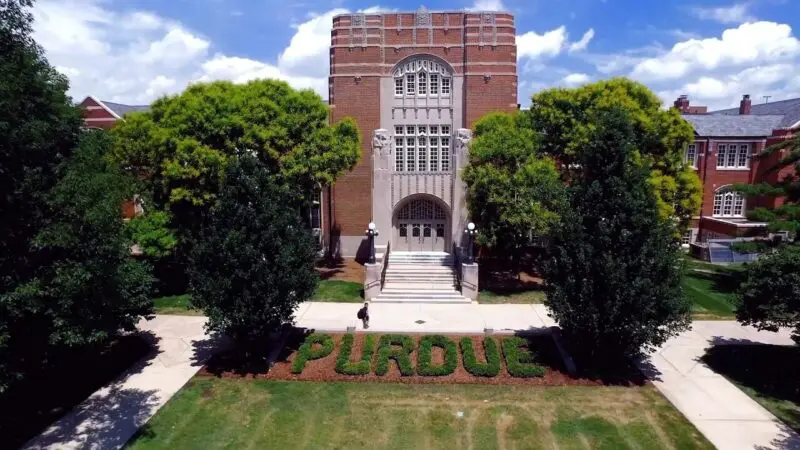
Purdue University has become one of the top destinations in the country for students coming from outside the United States. If you are planning to apply for 2026, the process involves more than filling out an application form. You need the right documents, the right transcripts, and a clear understanding of what admissions officers expect to see.
This guide walks through everything international applicants need to know before they submit their Purdue application.
Why International Students Choose Purdue

Purdue is not a random pick for students applying from abroad. The university ranks No. 9 among more than 4,500 public and private institutions in the U.S. for international student enrollment, according to the 2024 Open Doors Report from the Institute of International Education. Among public universities specifically, Purdue ranks No. 4 in the country.
During the 2023-24 academic year, Purdue enrolled 12,181 international students representing 130 countries, a 6.2 percent increase over the previous year. International students now make up a significant share of the total student body.
| Metric | Figure |
| International students enrolled | 12,181 |
| Countries represented | 130 |
| Share of total Purdue enrollment | 17.2% |
| Share of graduate and professional students | 40% |
| Share of undergraduate students | 10% |
The College of Science draws the highest share of international students by discipline, at 24.4 percent, followed by the College of Engineering at 22.4 percent and the Mitch Daniels School of Business at 17.6 percent. International students and their families also bring an estimated $340 million to Indiana’s economy each year and support close to 3,400 jobs statewide.
None of that happens by accident. Purdue has spent 75 years building its relationship with international exchange programs, dating back to 1949 when it welcomed 218 international students through its first partnership with IIE. The numbers today are a direct result of that long-term investment.
General Admission Requirements for 2026
Purdue accepts applications through its own online portal as well as the Common App, depending on the program. For 2026 admission, international applicants should expect the following baseline requirements:
- A completed application with the application fee paid or a fee waiver approved
- Secondary school transcripts or equivalent academic records
- Proof of English proficiency, since Purdue is not a test-optional school for this requirement
- Standardized test scores, if required by the specific program (many undergraduate programs remain test-optional, but this varies by college and major)
- A statement of purpose or personal essay, depending on the level of study
- Letters of recommendation for graduate and some undergraduate programs
Deadlines vary by term and program. Fall 2026 applications typically close earlier than spring 2026 applications, so it is worth checking the specific deadline for your intended college, since Purdue’s colleges do not all run on the same calendar.
English proficiency can be demonstrated through TOEFL, IELTS, or Duolingo English Test scores. Minimum score requirements differ slightly by program, and some accept a strong record of instruction in English as a substitute.
Required Documents Checklist
Before you start the application, gather these documents. Missing even one can delay your file being reviewed.
- Passport copy (photo page)
- Academic transcripts from every institution attended
- Certified English translations of any transcripts not originally issued in English
- English proficiency test scores
- Financial documentation, including an affidavit of support and recent bank statements
- Letters of recommendation, if required
- Standardized test scores, if applicable to your program
Once accepted, you will also need to provide additional documents to receive your Form I-20, which is required before you can apply for a student visa.
Transcript Requirements and Academic Credential Evaluation
Transcripts are where many international applications run into trouble, and it is worth slowing down here.
Purdue requires official transcripts from every secondary school and post-secondary institution you have attended. If your original transcripts are not in English, you cannot simply submit a rough translation done by a friend or family member. Universities expect a certified translation that mirrors the original document exactly, including grades, course titles, and institutional seals.
This is where working with a professional service matters. Getting accurate academic transcript translation done by certified translators reduces the risk of your application being flagged for inconsistencies or rejected outright for improper documentation. A certified translation typically includes a signed statement from the translator or translation company attesting to its accuracy, which admissions offices require as proof the document has not been altered.
Some applicants also need a credential evaluation, which goes a step further than translation by comparing your foreign coursework and grading scale to the U.S. system. Check with your specific Purdue program to see whether a credential evaluation is required in addition to translated transcripts, since this varies by college and by degree level.
A few practical tips for this step:
- Start the translation process early. Certified translations can take one to two weeks depending on document volume.
- Keep both the original and translated versions on hand. Purdue may ask to see both.
- Confirm whether your program wants a course by course evaluation or a general document by document evaluation, since these are not interchangeable.
Financial Documentation and Proof of Funds
International students must prove they can cover tuition, fees, and living expenses for at least one academic year before Purdue will issue an I-20. This usually means:
- A completed affidavit of support from the student or sponsor
- Bank statements no older than six months, showing sufficient funds
- A letter from a sponsor if someone other than the student is covering costs
- Scholarship or funding award letters, if applicable
Purdue calculates estimated costs of attendance each year, and your financial documentation needs to meet or exceed that figure. Falling short, even by a small margin, can delay your I-20.
Visa and I-20 Process After Admission
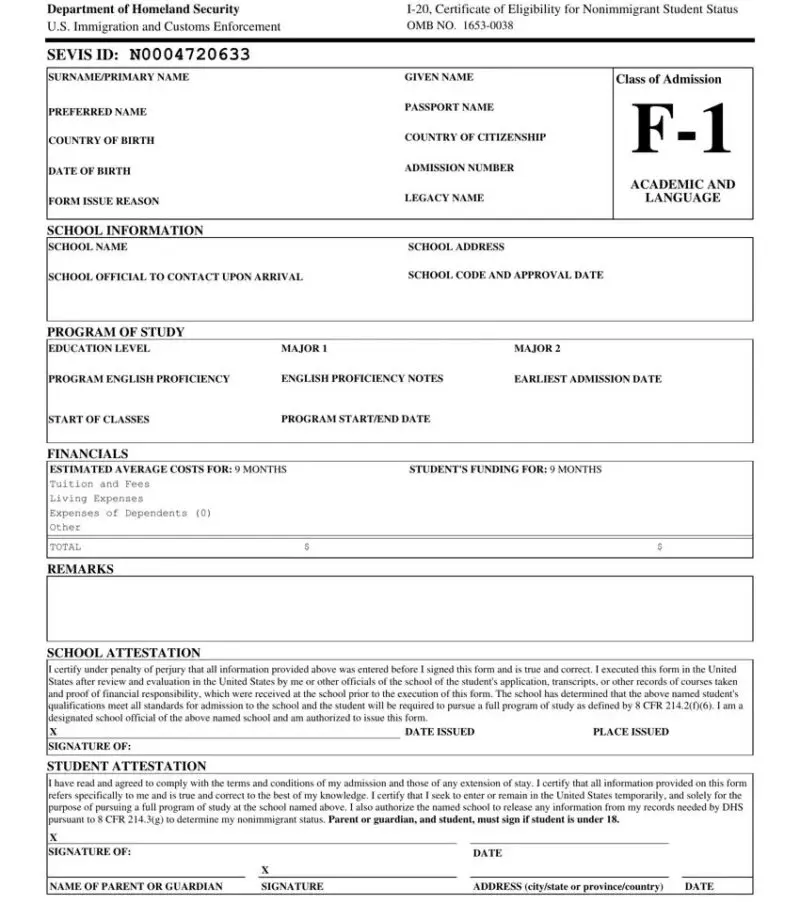
Once you are admitted and your financial documents are approved, Purdue issues Form I-20. From there, the process moves to the U.S. visa system:
- Pay the SEVIS I-901 fee
- Complete the DS-160 visa application form
- Schedule and attend a visa interview at a U.S. embassy or consulate
- Bring your I-20, passport, financial documents, and admission letter to the interview
Visa appointment availability varies significantly by country and season, so it is smart to schedule your interview as soon as your I-20 arrives rather than waiting until closer to the semester start date.
Common Mistakes to Avoid
A few avoidable errors show up again and again in international applications:
- Submitting transcripts translated by someone without certification credentials
- Waiting until the last month to start the credential evaluation or translation process
- Underestimating the amount required in financial documentation
- Assuming test score requirements are the same across every Purdue program
- Missing the earlier fall deadline because spring deadlines were confused with it
Each of these is easy to prevent with early planning, and most delays in the admissions process trace back to one of them.
Final Thoughts
Purdue’s standing as a top destination for international students did not happen by chance, and the university continues to invest in the systems that support applicants from admission through their first semester on campus. Getting your documents right the first time, especially transcripts and financial proof, is the difference between a smooth application and months of back and forth with the admissions office.
Start early, double check every requirement against your specific program, and treat document preparation with the same seriousness as the application essay itself. That is what separates a strong 2026 application from one that gets stuck in review.